

More than a dozen states have enacted laws to protect consumers from harmful food chemicals and ultra-processed foods. Your favorite food brands may be tied up in efforts to erase them.
A draft bill known as the “FRESH” and Affordable Foods Act, introduced last week by Rep. Kat Cammack (R-Fla.), would take an unprecedented step in food policy by undoing many state laws aimed at strengthening food safety. States would also lose authority to regulate food chemicals in the future.
If enacted, the bill would make it dramatically easier for the food industry to add new chemicals to the food supply without meaningful review by the Food and Drug Administration – and would make it harder for the public to get information about these substances.
The bill closely mirrors previous proposals advanced by Americans for Ingredient Transparency, or AFIT. This is a front group lobbying for the interests of the largest food manufacturers and trade associations in the country.
Names you might recognize on AFIT’s website include the Coca Cola Company, General Mills, Hormel Foods, Ken’s, Keurig Dr Pepper, Kraft Heinz, McCormick & Company, Nestlé, Ocean Spray, PepsiCo, Sargento and Tyson Foods.
While AFIT isn’t officially backing the bill, the clear parallels between its wishlist and the legislation make its involvement appear likely.
Brand favorites are tied up in the food fight
The companies belonging to AFIT own thousands of popular U.S. food and drink brands, whose products could be sitting on your shelves or in your fridge right now.
Below are just a few brands – many of which are known for promoting healthy or kid-friendly foods – owned by companies who are members of the front group AFIT.
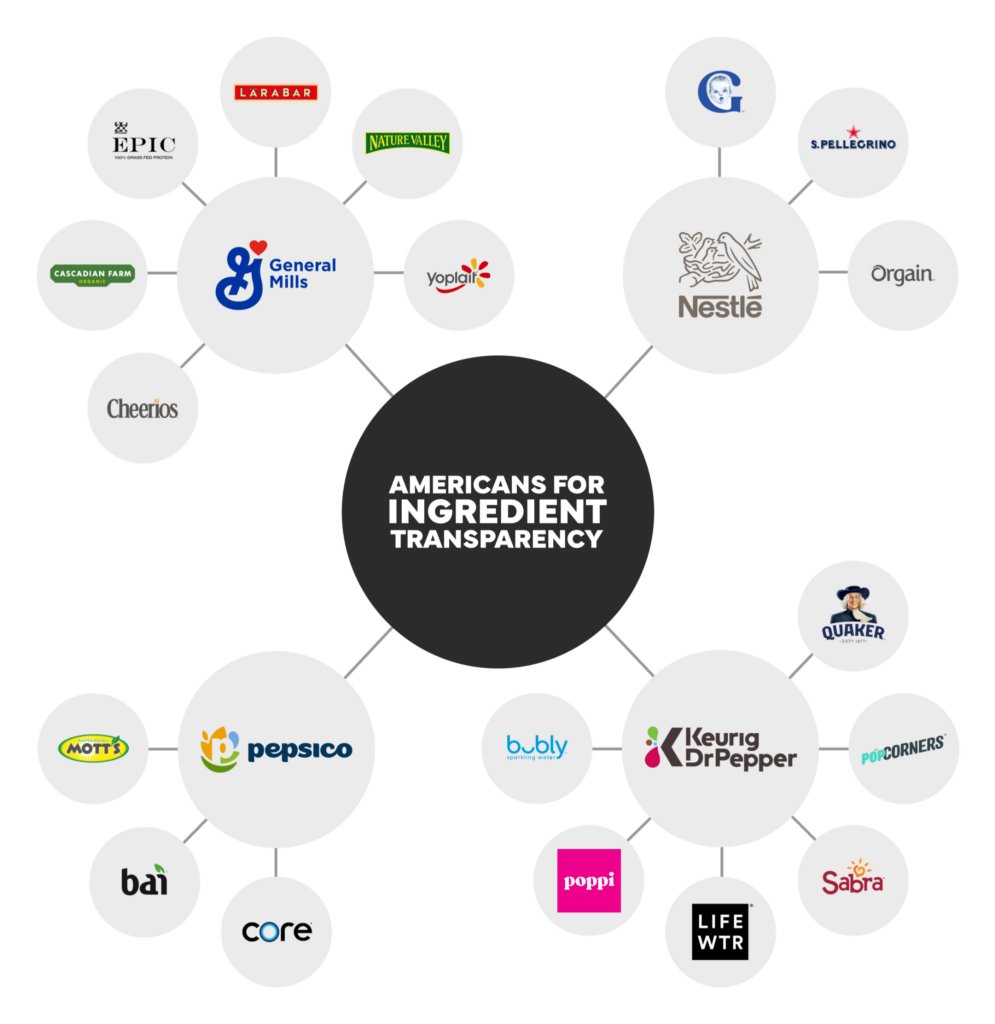
General Mills is known for classic cereal brands like Cheerios. It also owns Cascadian Farm, EPIC protein bars, Larabar, Nature Valley and Yoplait.
Nestlé is the parent company of a range of brands, from Gerber baby and toddler foods to San Pellegrino waters to Orgain protein powders and nutritional supplements.
Keurig Dr Pepper owns the Mott’s brand, which caters to kids and families with its applesauce, juice and other snack lines. It also owns multiple flavored water brands, including Bai and Core Hydration.
PepsiCo is the parent company of multiple brands marketing nutrition supplements and healthier beverage options like Bubly, Poppi and Lifewater. Its products also include Sabra hummus, PopCorners chips, and Quaker oats, bars and cereals.
The complete list of foods owned by member companies of AFIT spans products found in virtually every grocery aisle. It includes a wide range of popular meat and poultry items, cookies and crackers, chips and snacks, energy and sports drinks, canned food, condiments, spices and seasonings, and prepared and frozen meals.
The FRESH Act makes food less safe
The retroactive reach of the FRESH Act – undoing existing state food safety laws – is its most radical feature and the one that has received the least attention.
California’s Food Safety Act, which bans Red Dye No. 3, brominated vegetable oil, potassium bromate and propyl paraben from food sold in the state, would be nullified.
Similar laws in Arkansas, Texas and Utah banning the same chemicals would be void. Taken together, these state laws represent years of effort, public advocacy and the democratic process, which would all be eliminated overnight by one single federal bill.
The FRESH Act would also make it easier for companies to add chemicals to food without FDA approval. Food chemicals already approved, including those considered “generally recognized as safe,” or GRAS, would not receive additional FDA review.
But GRAS chemicals aren’t necessarily safe chemicals. That’s because nearly 99% percent of the chemicals approved as GRAS since the year 2000 have been greenlighted by industry, not the FDA.
The FRESH Act would undermine an already weak system for approving new chemicals. It would allow food chemical companies to submit even less information to the FDA on the chemicals they use.
The bill would also let companies enlist industry-funded expert panels to decide food chemicals are safe, as long as they are added to an FDA database. Experts could also continue to have conflicts of interest as long as they are “managed.” If the FDA doesn’t respond to a request to add a new chemical to the GRAS list in 90 days, it would be added by default.
Under the FRESH Act, even if the FDA does ban a food chemical due to health and safety risks, the chemical of concern would still be allowed in food for two years. Companies may also ask the FDA to hide safety information from the public or delay chemical restrictions indefinitely by requesting hearings.
Everything the bill aims to achieve is a striking contrast to the agenda of Health and Human Services Secretary Robert F. Kennedy, Jr. Under his signature “Make America Healthy Again,” Kennedy has called out food dyes, ultra-processed foods and the GRAS loophole as targets for reform.
What consumers can do now
In the absence of federal action, states have stepped up to protect our health by removing toxic chemicals from our food. The FRESH Act would strip states of that power and place food safety in the hands of chemical companies instead.
Contact your representative and urge them to preserve critical public health protections by rejecting the FRESH Act. This is a direct attack on states rights and food safety. Your call carries weight.
At home, shoppers can check EWG’s Dirty Dozen Guide to Food Chemicals, which highlights top food chemicals to avoid due to health and safety concerns.
For some extra help, take a look at EWG’s Food Scores, which provides ratings for more than 150,000 foods and drinks based on nutrition, ingredients and processing. Food Scores also flags unhealthy UPF and can help you identify alternatives.
Or if you’re on the go, EWG’s Healthy Living app puts that information in your pocket while you shop.
The food industry, including some of your favorite brands, is hoping consumers aren’t paying attention to this fight. Let’s prove them wrong.